.jpg)
The nomination of cluster heads for defence, infrastructure and finance business is awaited.

The country's largest carmaker Maruti Suzuki India on Thursday reported 14 per cent increase in total wholesales at 159,044 units in November. The company had dispatched 139,184 units to dealers in November 2021, MSI said in a statement. Last month, the company's domestic sales rose 18 per cent to 139,306 units as against 117,791 units in November 2021, it added.

The $2,500 'People's Car' to be unveiled on January 10 is a natural fit for India, but don't expect rivals to match it.
There are signs of Maruti taking Honda Mobilio seriously.
Ford Motor Co on Wednesday said it expects the sale of its two European marques Jaguar and Land Rover, in which India's Tata Motors has evinced interest, to be through either by this year-end or early next year.

Cyrus Mistry, who was replaced as chairman of Tata Sons last Monday, October 24, still serves as the chairman of Tata Steel, Tata Motors, Tata Consultancy Services, Indian Hotels, Tata Global Beverages, Tata Chemicals, Tata Industries and Tata Teleservices.

Among the Sensex firms, JSW Steel, Titan, Tata Steel, Sun Pharma, Reliance Industries, Bharti Airtel, Tata Motors and HDFC Bank were the biggest gainers. NTPC, Tech Mahindra, Maruti, State Bank of India and Larsen & Toubro were among the laggards.

India is sceptical that Tesla might import into the country cars made in China. Tesla executives were in India last month and appear to have proposed a factory in the country. But do not be surprised if that does not happen in a hurry.
Passenger vehicle wholesales in India witnessed a marginal growth in May on account of high base effect and muted demand due to general elections. The overall passenger vehicle dispatches from companies to dealers stood at 350,257 lakh units last month as compared to 335,436 in the same month a year ago, registering a growth of 4 per cent.

India's flagship motor show Auto Expo 2023 kicked off on Wednesday with the global unveiling of Suzuki Motor Corporation's concept electric SUV 'eVX' which is slated to hit the market by 2025. The company's Indian arm Maruti Suzuki India is among the major manufacturers participating in the show that has returned after three years. The Concept eVX is a mid-size electric SUV concept designed and developed by Suzuki Motor Corporation (SMC), Japan. It will be powered by a 60 kWh battery pack offering up to 550 km of driving range on single charge.

Fourteen per cent of the $16 billion invested by Ratan Tata in M&As abroad has been written off by his successor.
Tata Motors Limited, on Wednesday said it will launch its 1400cc 'Indica' family car in China 'very soon' and was closely evaluating the best options to penetrate into the world's fastest growing auto market.

From the Sensex firms, Bajaj Finance, HDFC, HDFC Bank, Bajaj Finserv, Asian Paint, State Bank of India, Tata Consultancy Services, Bharti Airtel, Reliance Industries and Tata Steel were the biggest gainers. HDFC climbed 2.59 per cent after the housing finance major on Thursday reported a 20 per cent growth in standalone net profit to Rs 4,425 crore for the quarter ending March 2023 on the back of higher interest income. IndusInd Bank, Nestle, Power Grid, ITC, Tata Motors and Mahindra & Mahindra were the major laggards.
India's largest automotive group said it had received 203,000 pre-paid orders worth Rs25bn ($507m) for the Nano, the world's cheapest car, which it put on sale for a 16-day booking period which ended on April 25.
The four-door, five-seater pick-up will be priced at Rs 7.62 lakh for the 4X2 version and Rs 8.58 lakh for the 4X4 version (ex-showroom Delhi). The car will be powered by the same engine which powers the group's sports utility vehicle Safari. It will have 2.2 VTT Dicor diesel engine, which belts out a power of 140 bhp. The car does not have much competition in the lifestyle pick-up market with the only other vehicle in the space being Mahindra's Scorpio Getaway.
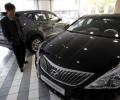
The automaker was found to have engaged in anti-competitive practices.
Please take the poll at the end of the slide show to select the one which you feel is India's top brand.

At a time when fuel prices across the country are going through the roof with no sign of it moderating, electric vehicles seem the likely choice for car buyers who are looking at saving fuel costs. And add to it the negligible maintenance of electric vehicles. Continuing with this revolution with their 2nd offering in the EV segment, Tata Motors now offers the 2021 Tigor EV to its customers. Tigor petrol with its style-back design has always been a stunner since its launch and it still is.
The variant, which will be the second JLR model in India, with a 2.2 litre diesel engine will be introduced in India for the first time at an entry price of Rs 44.5 lakh or Rs 4.45 million (ex-showroom, Mumbai) and will be assembled at Tata Motors' Pune facility.
From the Sensex basket, Asian Paints, Sun Pharma, HDFC Bank, Tata Consultancy Services, Axis Bank, Tata Steel, JSW Steel, Larsen & Toubro, ICICI Bank and Power Grid were the major gainers. Tata Motors dropped over 8 per cent despite reporting over three-fold jump in consolidated net profit at Rs 17,528.59 crore for the fourth quarter ended March 31, 2024. NTPC, Bharti Airtel, Titan, State Bank of India and Nestle were the other major laggards.
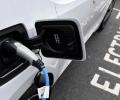
Proliferation of home chargers of around 7 KWh and above, which take six to seven hours to fully charge a car depending on the model, bring running costs down by a third or so. That, coupled with the increasing range of modern electric cars, can lead to a massive increase in sales.

April-June 2023 (Q1FY24) was a mixed quarter for India's top family-owned business groups. Three of the big five in terms of revenue reported a year-on-year (Y-o-Y) decline in combined net sales and two saw a Y-o-Y fall in net profits. Combined net sales of all listed companies in the five groups were up just 2.2 per cent Y-o-Y at Rs 6.6 trillion in the quarter, down sharply from the 10.3 per cent in the March 2023 quarter (Q4FY23) and 42.8 per cent in Q1FY23.

The notices from the stock exchanges followed reports about Cyrus Mistry disclosing possible writedown to the tune of $18 billion faced by the conglomerate
Tata Motors twice fixed faulty parts of the Nano.

From the Sensex pack, ICICI Bank, State Bank of India, Larsen & Toubro, Maruti, Tata Steel, Kotak Mahindra Bank, Bajaj Finance, Nestle, Power Grid and HDFC Bank were the major gainers. Jio Financial Services, Bharti Airtel, Tata Motors, Tech Mahindra, ITC, UltraTech Cement and Mahindra & Mahindra were among the laggards.

From the Sensex pack, State Bank of India, IndusInd Bank, Bajaj Finserv, Tata Steel, ITC, Axis Bank, HDFC Bank, UltraTech Cement, NTPC and Tata Motors were the major winners. Nestle, Kotak Mahindra Bank, Bharti Airtel, HCL Technologies and Hindustan Unilever were the laggards.
Analysts said the development marked a renewed attempt by Fiat to boost its position in the rapidly growing Indian car market.

Two firms belonging to the Adani group - India's most valued conglomerate - are part of the Nifty 50 index. The group, however, has no representation in the Sensex. And it could stay this way if a proposed index qualification rule change gets approved. Recently, Asia Index, a joint venture between S&P Dow Jones Indices and BSE responsible for index composition, floated a consultation paper where it proposed that a stock must have a derivative contract to be eligible for inclusion in the flagship 30-share Sensex index.

Among the 30 Sensex companies, Kotak Mahindra Bank, Asian Paints, Reliance Industries, ITC, Sun Pharma, ICICI Bank, Axis Bank and JSW Steel were the major laggards. Larsen & Toubro, Tata Motors, Maruti, NTPC, Mahindra & Mahindra and UltraTech Cement were among the gainers.

Tata Steel fell the most by 4.21 per cent. NTPC, Tata Motors, HCL Technologies, Mahindra & Mahindra, State Bank of India, Power Grid, Tech Mahindra, Larsen & Toubro and JSW Steel also declined. HDFC Bank was the only gainer from the pack. In Asian markets, Seoul, Tokyo and Hong Kong settled in the positive territory while Shanghai ended lower.
From the Sensex pack, NTPC, Bajaj Finance, IndusInd Bank, UltraTech Cement, Bajaj Finserv, State Bank of India, Tata Motors, ITC, Power Grid and Larsen & Toubro were the biggest gainers. IndusInd Bank climbed 2 per cent after the company on Tuesday reported a 30 per cent jump in consolidated net profit in April-June quarter at Rs 2,124.50 crore, helped by core income growth and lower bad loan provisions.
The late leader transformed the company and his work will be reflected in time to come.
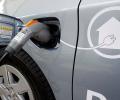
At a time when consumers increasingly embrace green mobility solutions, it is not electric cars but hybrids that are taking the lead, as automotive sales data indicate. Since January, 64,097 electric cars have been sold compared to 266,465 hybrids, according to data from the Ministry of Road Transport and Highways' Vahan dashboard. Hybrid car sales have surged from 4.42 per cent of the 4.1 million cars sold in calendar year 2022 to 7.2 per cent this year.
Benchmark equity indices climbed nearly 1 per cent on Wednesday on buying in HDFC Bank and Reliance Industries. Investors are eyeing the two important events lined up ahead -- the interim budget and the US Fed interest rate decision -- to derive further cues from. Recovering all the early lost ground, the 30-share BSE Sensex jumped 612.21 points or 0.86 per cent to settle at 71,752.11.

China's covid crisis could provoke a raw material crunch for India's EV industry later this year.
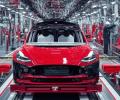
The meltdown in Dalal Street that wiped out investor wealth to the tune of 44 trillion in 2025 also seems to be having a ripple effect on the country's vibrant automobile retail sales.
Maruti has shortlisted 10 candidates so far. Tata Motors declined to give details, but confirmed it is looking at recruiting specialists for different functions of product development, given their research and development expansion plans in India. Both companies are looking at people with relevant knowhow on emission and safety norms in Europe and the US.

Budget 2014-15 has done away with the tax sunset clause of March 2014.

Tata was concerned that most innovations were happening outside India, some by Indians.
